
Lessons we’ve learned on real projects (page 78)
The links, tools and tips our engineers and designers share with each other, one “today I learned” at a time.
- lessons shared
- 3,447
- people sharing
- 86
- database started in
- 2016








Tech Insights· calpaterson.com
The strange world of Python, as used by big investment banks:
Shared by
Read on calpaterson.com- Architecture
- Finance
- Python
cstrnt.dev
3 TypeScript Tricks I wish I knew when I learned TypeScript:
TypeScript is a big Superset of JavaScript which has many features which might not be shown in every beginner tutorial. This post has three of them to make your life easier learning TypeScript.
Rebeca Sarai
Tech Insights· cstrnt.dev
3 TypeScript Tricks I wish I knew when I learned TypeScript:
From cstrnt.dev
TypeScript is a big Superset of JavaScript which has many features which might not be shown in every beginner tutorial. This post has three of them to make your life easier learning TypeScript.
Shared by
Read on cstrnt.dev- JS
- TypeScript
refine.dev
A React-based framework for building data-intensive applications in no time:
Build enterprise internal tools and B2B apps 10x faster with Refine agents. Experience the future of vibe coding and AI-led development.
Flavio Juvenal
Tech Insights· refine.dev
A React-based framework for building data-intensive applications in no time:
From refine.dev
Build enterprise internal tools and B2B apps 10x faster with Refine agents. Experience the future of vibe coding and AI-led development.
Shared by
Read on refine.dev- React

imgproxy.net
Fast and secure standalone server for resizing and converting remote images:
imgproxy is a fast and secure standalone server for resizing and converting remote images. The guiding principles behind imgproxy are security, speed, and simplicity
Flavio Juvenal
Tech Insights· imgproxy.net
Fast and secure standalone server for resizing and converting remote images:
From imgproxy.net
imgproxy is a fast and secure standalone server for resizing and converting remote images. The guiding principles behind imgproxy are security, speed, and simplicity
Shared by
Read on imgproxy.net- Image
- Performance
- Proxy

Tech Insights· intercom.com
How do you say no to customers?
Shared by
Read on intercom.com- Management
- Product

fettblog.eu
Prefer type aliases over interfaces:
This is the second article in a series of articles where I want to highlight ways on how to keep your TypeScript code neat and tidy. By nature, this series is heavily opinionated and is to be taken with grains of salt (that’s plural).
Rebeca Sarai
Tech Insights· fettblog.eu
Prefer type aliases over interfaces:
From fettblog.eu
This is the second article in a series of articles where I want to highlight ways on how to keep your TypeScript code neat and tidy. By nature, this series is heavily opinionated and is to be taken with grains of salt (that’s plural).
Shared by
Read on fettblog.eu- JS
- TypeScript

developer.mozilla.org
Pros and Cons of using e.stopPropagation
The stopPropagation() method of the Event interface prevents further propagation of the current event in the capturing and bubbling phases. It does not, however, prevent any default behaviors from occurring; for instance, clicks on links are still processed. If you want to stop those behaviors, see the preventDefault() method. It also does not prevent propagation to other event-handlers of the current element. If you want to stop those, see stopImmediatePropagation().
Rebeca Sarai
Tech Insights· developer.mozilla.org
Pros and Cons of using e.stopPropagation
From developer.mozilla.org
The stopPropagation() method of the Event interface prevents further propagation of the current event in the capturing and bubbling phases. It does not, however, prevent any default behaviors from occurring; for instance, clicks on links are still processed. If you want to stop those behaviors, see the preventDefault() method. It also does not prevent propagation to other event-handlers of the current element. If you want to stop those, see stopImmediatePropagation().
Shared by
Read on developer.mozilla.org- JS

adamj.eu
Tips for debugging with print(): [python
If you’re embarrassed at debugging with print(), please don’t be - it’s perfectly fine! Many bugs are easily tackled with just a few checks in the right places. As much as I love using a debugger, I often reach for a print() statement first.
Joao Veras
Tech Insights· adamj.eu
Tips for debugging with print(): [python
From adamj.eu
If you’re embarrassed at debugging with print(), please don’t be - it’s perfectly fine! Many bugs are easily tackled with just a few checks in the right places. As much as I love using a debugger, I often reach for a print() statement first.
Shared by
Read on adamj.eu- Python

Tech Insights· medium.com
Tokens in Design Systems:
Shared by
Read on medium.com- Design System
- Design Token
- Design System
- Product Design
- Product Design
- UI
- UX

uxlibrary.org
A website with resources for UX/UI:
Your one-stop website for UX Articles, Books, Resources, & More
Anna Erbetta
Tech Insights· uxlibrary.org
A website with resources for UX/UI:
From uxlibrary.org
Your one-stop website for UX Articles, Books, Resources, & More
Shared by
Read on uxlibrary.org- Design
- Product Design
- Product Design
- Resources
- UI
- UX
Tech Insights· web3js.readthedocs.io
Calling smart contract functions using - call() vs send():
Shared by
Read on web3js.readthedocs.io- Solidity
- Web3

tactics.convertize.com
Cognitive Ease definition:
Cognitive ease or fluency is the measure of how easy it is for our brains to process information. The Cognitive ease associated with something will alter how we feel about it and whether we are motivated to invest our time and effort in it. The Nobel prize-winning Economist Daniel Khahneman explains in his book Thinking, Fast and Slow (2011) that our brains have two modes of thinking: the first that operates automatically and quickly, with little or no effort and no sense of voluntary control, and a second system that pays more conscious attention to information presented, especially in the…
Flavio Juvenal
Tech Insights· tactics.convertize.com
Cognitive Ease definition:
From tactics.convertize.com
Cognitive ease or fluency is the measure of how easy it is for our brains to process information. The Cognitive ease associated with something will alter how we feel about it and whether we are motivated to invest our time and effort in it. The Nobel prize-winning Economist Daniel Khahneman explains in his book Thinking, Fast and Slow (2011) that our brains have two modes of thinking: the first that operates automatically and quickly, with little or no effort and no sense of voluntary control, and a second system that pays more conscious attention to information presented, especially in the…
Shared by
Read on tactics.convertize.com- Psychology
- Sales

Tech Insights· medium.com
Optimizing Pattern Searching Queries in PostgreSQL:
Shared by
Read on medium.com- PostgreSQL
- SQL
checklist.design
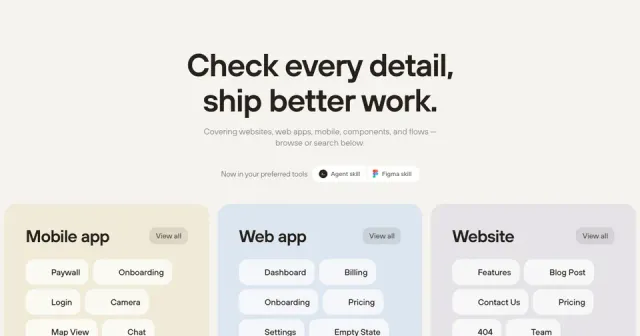
A collection of the best design practices
Design checklists for websites, web apps, mobile, components, and flows. Check every detail, ship better work.
Pedro Bacelar
Tech Insights· checklist.design
A collection of the best design practices
From checklist.design
Design checklists for websites, web apps, mobile, components, and flows. Check every detail, ship better work.
Shared by
Read on checklist.design- Best Practices
- Checklist
- Collection
- Design
- UI
- UX

developer.okta.com
An Overview of Best Practices for Security Headers:
Security headers instruct browsers how to behave and prevent them from executing vulnerabilities that would endanger your users. Learn how to use them in this tutorial.
Flavio Juvenal
Tech Insights· developer.okta.com
An Overview of Best Practices for Security Headers:
From developer.okta.com
Security headers instruct browsers how to behave and prevent them from executing vulnerabilities that would endanger your users. Learn how to use them in this tutorial.
Shared by
Read on developer.okta.com- Security
- Web
Book a call
Found it useful?
Let’s put it to work.
Tell us about your product and the problem in front of you. We’ll bring what we’ve learned on real projects.
Tell us about your product, and we’ll bring what we’ve learned.
Still prefer the good old email? Contact us