6months together
- Deep Dive1 week, to the MVP roadmap
- MVP, v0 to v23 months
- Beyond the MVPSpecs and roadmaps for investors
What we did
- Product DiscoveryA one-week Deep Dive into the market and requirements, ending in the MVP roadmap.
- Full-Cycle DevelopmentTook the marketplace from concept to a working MVP in three months, over three versions.
- UI/UX DesignRefined the UX in v2 and designed a doctor reputation system to lower hospitals' risk.
- Django DevelopmentDjango and React on our boilerplate, with a typed API client and AWS infrastructure as code.
Built with
- Django
- React
- AWS
- Postgres


Hospitals that need doctors usually hire them through staffing agencies, and pay for it. This client’s CEO, after more than 12 years in healthcare, set out to build a marketplace where hospitals and staffing companies hire doctors directly. We took it from a one-week Deep Dive to a working MVP in three months, and kept supporting its fundraising after that.
1 week
of Deep Dive, from the kickoff to the MVP roadmap.
3 months
from concept to a working MVP, over three versions.
About the client
The CEO knew hospital administration and staffing from the inside. Hospitals always need qualified professionals, and as demand grows they spend more and more with staffing companies.
The marketplace removes the agency from the middle. Weighing cost, quality and performance, it helps hospitals and staffing companies choose the most suitable doctors at competitive rates, which improves patient care and lowers the risk of doctor burnout.
The challenge: an MVP that proves the idea
The opportunity was real: the U.S. faces a projected shortage of between 37,800 and 124,000 physicians within 12 years. To validate the idea, the founder needed a first Minimum Viable Product (MVP).
The hard part was the balance. Too many features would bring scope creep and delays; too few would fail to show the product’s value.
The CTO had started the work on Vinta’s django-react-boilerplate, our open-source starting point for MVPs, and that is how the company found us.
The plan to grow was to reach product-market fit with smaller facilities and staffing companies first. Larger players tend to wait for the market to settle before they move, and a proven product would draw their attention.
Our approach: a Deep Dive, then three versions
We started with a Deep Dive: a week of research into the industry and the initial requirements. On day one, we held the kickoff with the founders and brought what we had learned; once they had validated our assumptions, we wrote the MVP roadmap that same week.
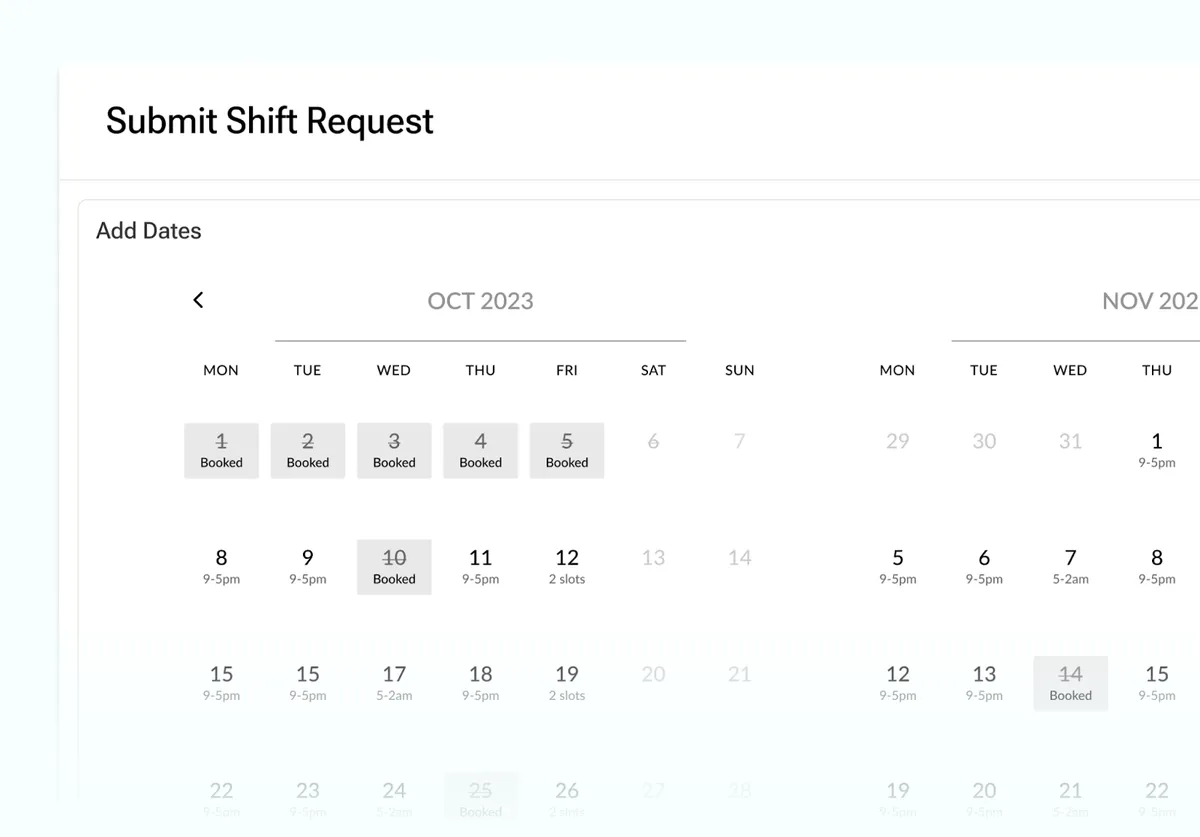
It took three months to go from concept to a working product. We split the features so each version could be shown early, to users and to stakeholders, and with tight funding we kept the client updated at every step, so each investment decision was an informed one.
HospitalOur team, by handDoctor
HospitalSelf-serviceDoctor
Hospital★ ReputationDoctor

Building the right product
We brought our product consultancy to every stage, so the platform had the right features. It does not matter how fast you build if you are not building the right thing.
We prioritized the supply side. Winning customers on the demand side is usually slower, so we built a strong network of doctors first. The roadmap favored what providers needed, a smooth onboarding and day-to-day experience, which kept them engaged while demand was still growing.
We also put measures in place against disintermediation, so hospitals and doctors keep transacting through the marketplace instead of around it.

How we built it fast
Open-source libraries
When speed matters, we build on tried and tested open-source libraries, and spend our time adapting them rather than writing the same features from scratch. Together with our django-react-boilerplate, they gave us good defaults and less repetitive work:
API documentation
drf-spectacular generates it automatically as the product is built.
A typed API client
OpenAPI TypeScript Codegen turns drf-spectacular’s API spec into a TypeScript client.
Sign-in
django-allauth handles social and regular logins.
Infrastructure on AWS
For a product this size, we usually recommend a Platform as a Service (PaaS): it deploys quickly with little DevOps work. The client’s tech advisor, though, wanted a more robust cloud environment that he could run and customize from his own experience.
So we set up the whole platform on AWS, on Elastic Container Service (ECS), and versioned the infrastructure as code with AWS CloudFormation, which makes mistakes easier to correct.
Metrics without the tooling cost
A hypothesis is only a guess until you measure it, so we teach our clients which metrics to track once the product gains traction. In a mature product, we use tools that collect the data and draw the charts; in an MVP, integrating them is not worth the cost, so we collect and analyze the data by hand. As the marketplace’s first exchanges take hold, we are ready to follow every doctor-hospital interaction.
Outcome: an MVP ready for investors
Beyond the product, we supported the client’s fundraising: feature specifications, user journey maps and roadmaps, then detailed product requirement documents built from investor feedback and brainstorming sessions together.
We focused on validating the features that mattered most to users and investors. We designed a reputation system for doctors, inspired by Airbnb and Booking.com, to lower the risk for hospitals, and added Google Analytics to give investor pitches real usage data.
Raising seed and venture capital is hard, so our goal was to make the client’s offering stand out, and our partnership continued beyond the MVP.