Why every software development team should have a product designer

Lais VarejãoChief Product Officer

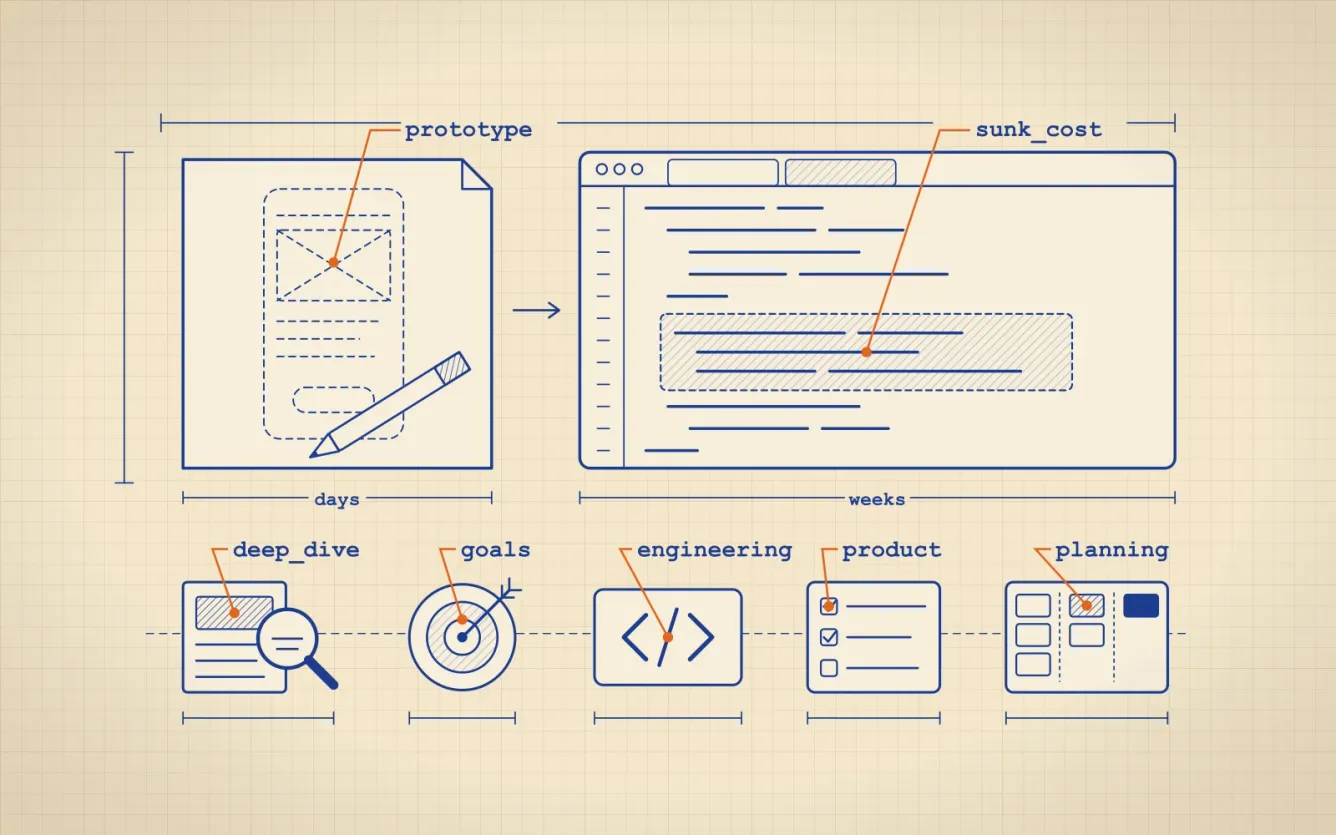
Every software development team should have a product designer because design makes products more viable and profitable, and faster: a designer adapts the process to your budget and stage, prototypes ideas in days, and catches the wrong features before engineers spend weeks building them. In a venture capital-constrained environment, cutting designers can reduce your burn rate, but it also vastly increases the level of risk in your product and business.
Project managers still ask themselves: why should I invest in design? Can’t developers take care of launching product features on their own? In this post, we answer these questions with the lessons we’ve learned designing products over the past 14 years, and show how to integrate a designer into your process.
Key takeaways
Why have a designer
Design makes products more viable and profitable. Cutting it to lower the burn rate raises the risk in your product and your business.
Fit the process to the team
There isn’t a perfect design process. Adapt it to budget, maturity and velocity instead of imposing one written in stone.
Avoid the sunk cost
Designers prototype and validate ideas in days, before engineers spend weeks building features customers may never adopt.
Earn stakeholders’ trust
Stakeholders have different leadership styles and product visions. Designers adapt their focus and methods to build trust with each of them.
Onboard in five steps
Study the business, align goals, get close to engineering, understand the product, and join the planning.
Why should a software development team have a product designer?
Well, there are a million arguments about the value of design for the tech industry.
In 14 years of working with B2B startups and innovation projects, the most common scenario we’ve encountered in software development teams is a group composed of founders plus a couple of engineers, and maybe a manager or a tech lead. They’re focused on bootstrapping the product as rapidly as possible, pivoting, searching for a market fit, and working hard to make investors happy.
So why does a lean team like this need a designer onboard? Well, it’s fair to say that you should invest in design because it foments more viable and profitable products, quicker even.
And why is that true? There are two reasons: flexibility, and the costs a designer helps you avoid.
Design that adapts to your budget, stage and speed
A competent product designer knows that there isn’t a one-size-fits-all approach. The product design process must be flexible enough to accommodate factors such as budget, maturity, and velocity, among others.
This means that we should not impose a rigid design process. Designers should fit into your business strategy to be able to deliver value.
Product designers who adapt their processes and provide business value bring several benefits:
- Fast prototypes. Designers can prototype your ideas really fast (think days, not months).
- Early adopters on board. Designers support sales and customer success to align early adopter customers with sketches, mockups, and presentations.
- Fewer risky bets. Designers can foresee risks and guide the product and engineering team into delivering the features with the most strategic value to drive business growth.
- Complexity organized. Designers turn many conversations with stakeholders and customers into aligned goals and needs, and into the assets that guide the feature architecture: prototypes, user flows, specs for engineering.
- A cohesive product. In the long run, designers help you build a cohesive and trusted product that communicates very well with your business and your market.
Avoiding the cost of building the wrong thing
Besides flexibility, having a designer onboard also helps you avoid unnecessary costs.
The cost of building the right features in the wrong way is big. Engineers will spend weeks, even months, coding, debugging, migrating, and launching before it’s even clear to everyone if that’s the product the team should be building.
So ultimately, if you want to scale from having just a functional MVP to becoming an actual robust business that thrives in a fast-paced, always-changing digital market, you need a design operation.
How do you onboard a product designer into a development team?
In five steps, which we learned from projects like these two.
Alt Legal is a cloud-based software company that helps American businesses prepare and manage global IP filings. They came to us looking for a complete overhaul of their platform. They’ve updated their brand and engineering architecture and wanted to impact the whole US market for IP management. Today, more than 2,000 law firms and legal departments use Alt Legal to manage trademarks, patents, copyrights, and more.
 Case study · LegaltechDocketing teams work from clean, current IP dataRead the case study
PlusPlus, on the other hand, is a knowledge platform that fast-tracks productivity. They came to us wanting to launch their ideas fast, incorporating large customers like Netflix, Shopify, and Salesforce. The challenge was to iterate fast, becoming a one-stop shop for learning managers to build training courses, knowledge repositories, company events, mentorship hubs, and much more.
 Case study · EdtechTeams teach each other at enterprise scaleRead the case study
Based on these and other experiences, this is how to kickstart design in a software development team.
1. Deep dive into the project
First off, the designers should study the company, their market segment, and their product branding very thoroughly, even before joining the team.
Any resources are welcome at this point: pitch decks, marketing research, business plans, internal documentation, brand books, access to demo instances of the product. With this brief research, they should understand the overall business intention, general audience, tone, language, and marketing angle (landing pages, social media).
Later on, the designer can do deeper research to increase the team’s shared understanding, helping set up a more accurate user persona. But for starters, this is enough.
2. Align business goals
Secondly, we need to align business goals so designers know where they should strike first. Set up calls to introduce the designer to all the relevant stakeholders: product owners, product managers, customer success managers, C-levels.
In these conversations, the most important question is: what business goals are we aiming for? For example:
- Bringing in big logos to increase market visibility.
- Increasing MAUs (Monthly Active Users).
- Increasing revenue by upselling features to current customers, lowering churn, or reducing customer complaints.
3. Integrate with engineering
The designers must be very close to the engineering team. They must hear its current struggles and understand the complexity of the product: features that require a lot of rework and hotfixes, or the lack of frameworks for defining simple actions. These issues make engineering work harder, but not more efficiently, to deliver business value.
Understanding the technical limitations of the current stack also avoids unnecessary conflicts between designers and engineers. The end goal is to make engineering more assertive in the features it launches, because design helped plan and validate them earlier, increasing the team’s confidence and reducing overall noise.
4. Understand the product
Designers should be able to answer these questions about the product:
- What areas of the product are most valuable to customers, and why?
- What debts contribute most to a bad user experience? Check metrics, customer support tickets, and sales difficulties.
- What design patterns are in place, intentionally or accidentally? A Design Inventory or a Heuristic Evaluation finds them.
- Are there any frameworks in place, such as a third-party or proprietary design system, Bootstrap, or Django Admin?
5. Get a complete view of the planning
Once these priorities and struggles are understood, the designers must be in contact with the product planning. If the client already has a defined backlog in a project management tool, it’s key that designers have access to it.
Designers should get a sense of what’s to come, so they can plan ahead, anticipate issues and suggest validation methods. They should know:
- Are there any hard deadlines we’re trying to meet?
- How fast are we launching new improvements and features?
- Most importantly, how are we prioritizing the next steps?
What kind of design work does your product need?
When a business brings design into its mix, it can have very different goals, as the Alt Legal and PlusPlus examples show. Those are not the only ways a product designer can be useful in a software development team. Most design work falls into one of three approaches.
Incremental improvements
Small, iterative changes to the existing product. This approach addresses specific problems or improves certain aspects of the product without disrupting its overall capabilities.
Incremental improvements are faster and need fewer resources than a complete overhaul, so they let organizations make progress quickly and with minimal risk. Keep in mind that they may not address the root cause of major problems, for example, “Why is this specific customer segment not using my product?”
Complete overhaul
A redesign that starts from scratch and rethinks the entire product, or an entire section of it. This approach fits when one or more product modules no longer meet customers’ needs and need pivoting, or when new technologies or trends make the current design outdated.
A complete overhaul requires significant time and resources, but it’s also an opportunity to create a fresh product that meets the current needs of the market. That’s what Alt Legal came to us for.
Product spinoff
A new product based on an existing one, with a different focus or target audience. This approach leverages the existing product’s strengths and resources while addressing new market opportunities or user needs.
Designers help understand and operationalize the spinoff, aligning it with your core products while shipping fast solutions to validate its potential.
Conclusion
Kickstarting a design operation inside an ongoing product is a crucial step toward delivering highly strategic and profitable products. Whether it’s a complete overhaul, incremental changes, or a product spinoff, the needs of the product and its market angle will change over time.
Product designers need to understand these changes and adapt their processes and methods accordingly. A well-structured design operation keeps pace with these changing needs and keeps the product relevant and valuable to your customers. By being proactive and flexible, designers play a key role in software development teams, driving product success and delivering value to your organization.
Already have a design team? Read Design Operations: 6 tips to streamline your design process to make it more efficient.
Frequently asked questions
What does a product designer do in a software development team?
A product designer turns ideas and conversations into something the team can test and build. They prototype ideas in days, align early adopter customers with sketches and mockups, spot risks before engineering starts, and translate what stakeholders and customers need into prototypes, user flows and specs for engineering.
Can developers launch product features without a designer?
They can ship them, but they risk building the right features in the wrong way. Engineers may spend weeks or months coding, debugging and launching before it’s clear that it’s the product the team should be building, and then keep maintaining features customers don’t adopt. A designer validates those ideas earlier, while changing them is still cheap.
Does an early-stage startup need a product designer?
Yes, even a lean team of founders and a couple of engineers. Cutting design lowers the burn rate, but it raises the risk in the product and the business. A good designer doesn’t impose a rigid process: they adapt it to the team’s budget, maturity and velocity.
How do you onboard a product designer into a development team?
In five steps: the designer studies the company, its market and its brand; aligns on business goals with the stakeholders; gets close to the engineering team and its struggles; learns which areas of the product matter most and which debts hurt the user experience; and joins the product planning and backlog.
How should product designers and engineers work together?
Closely, from the start. Designers should hear engineering’s struggles (rework, hotfixes, missing frameworks) and understand the limits of the current stack. When design plans and validates features earlier, engineering launches them with more confidence and less rework.
Should you redesign your product or improve it step by step?
It depends on the problem. Incremental improvements are faster and cheaper, and fit specific issues, but may not reach the root cause of a major one. A complete overhaul fits modules that no longer meet customers’ needs or a design that has become outdated, and takes more time and resources. A product spinoff reuses an existing product’s strengths for a new audience or need.
Related articles
Article · 9 min read
Designers and developers: solving friction for better products
Practical ways for designers and developers to close communication gaps and ship.
9 min read
Article · 8 min read
The value of product discovery: is it worth the investment?
Why product discovery is worth the investment: it catches usability problems, saves development time and keeps investors confident.
8 min read