
2months together
- Research and workshopsPersona and user journey
- Prototype and assessmentMockups and RAG architecture
What we did
- Product DiscoveryA two-week sprint that narrowed a broad requirements document into a scoped, estimated plan.
- Healthcare AI Agents & AutomationA technical assessment of a RAG pipeline for AI search, summaries and automatic tagging.
- UI/UX DesignMockups of AI search, summaries, tag suggestions and an easier sign-up for researchers.
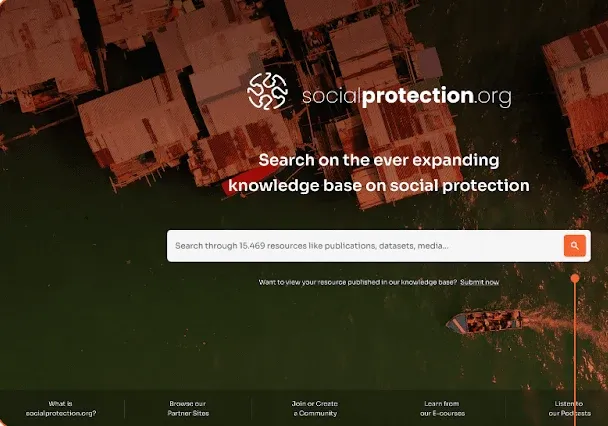
Access to knowledge can change lives and societies. With over 15,000 resources, socialprotection.org, the United Nations’ knowledge-sharing platform on social protection, holds evidence that can shape policies, inform research and improve social welfare systems worldwide. But the platform had reached a turning point.
The challenge: 15,000 resources, hard to find
The platform faced four connected problems:
Manual categorization
Tagging every new resource by hand created bottlenecks and slowed down the knowledge sharing it was meant to speed up.
Time lost searching
Researchers and practitioners searched thousands of documents, often without finding what they needed.
Quality at scale
Keeping quality high got harder as the platform grew, and evidence-based policymaking depends on it.
Access where it matters
The people who needed it most, in low- and middle-income countries, struggled to find information relevant to their own context.
These were not small technical issues. They stood in the way of the UN’s mission to promote inclusive growth and sustainable development, in regions where a single policy decision can affect millions of lives.
Searches returned inconsistent results, categorizing documents took up staff time, and growing the platform without losing quality was getting harder. Here is how large language models (LLMs) became part of the answer.
Our approach: a two-week Product Discovery
Rather than start building right away, we proposed a two-week Product Discovery sprint. The UN had already chosen LLMs as a promising direction, but getting them right needed planning and validation before investing in development.
The sprint had four goals:
- design an LLM integration architecture that could grow with the platform;
- prototype AI-powered search and categorization;
- write a detailed implementation timeline, milestone by milestone;
- find the technical risks early and plan how to reduce them.
Testing the core assumptions before full-scale development helped the team avoid the AI pitfalls that often lead to costly delays and rework.
The team
We put together a small, specialized team:
- A Lead Developer with deep AI and LLM experience, to judge technical feasibility and design the RAG pipeline;
- A Principal Product Designer, to make complex search and categorization simple for researchers and academics;
- A Product Manager, to tie it all together and balance what was technically possible with the UN’s organizational constraints.
The team worked directly with the Social Protection Department and its Product Owner, so every decision was checked against real operational needs. With technical, design and domain knowledge in the same room, the team could work on the AI architecture while making sure the solution fit the UN’s existing workflows.
The two weeks followed a simple rhythm:
- technical feasibility sessions in the mornings;
- design workshops in the afternoons;
- async feedback on Microsoft Teams in between.

Designing for researchers
Early in the sprint, our Principal Designer identified the platform’s main users: academic researchers. From earlier research and conversations with UN stakeholders, we learned about their field, interests, goals, daily challenges and comfort with technology.
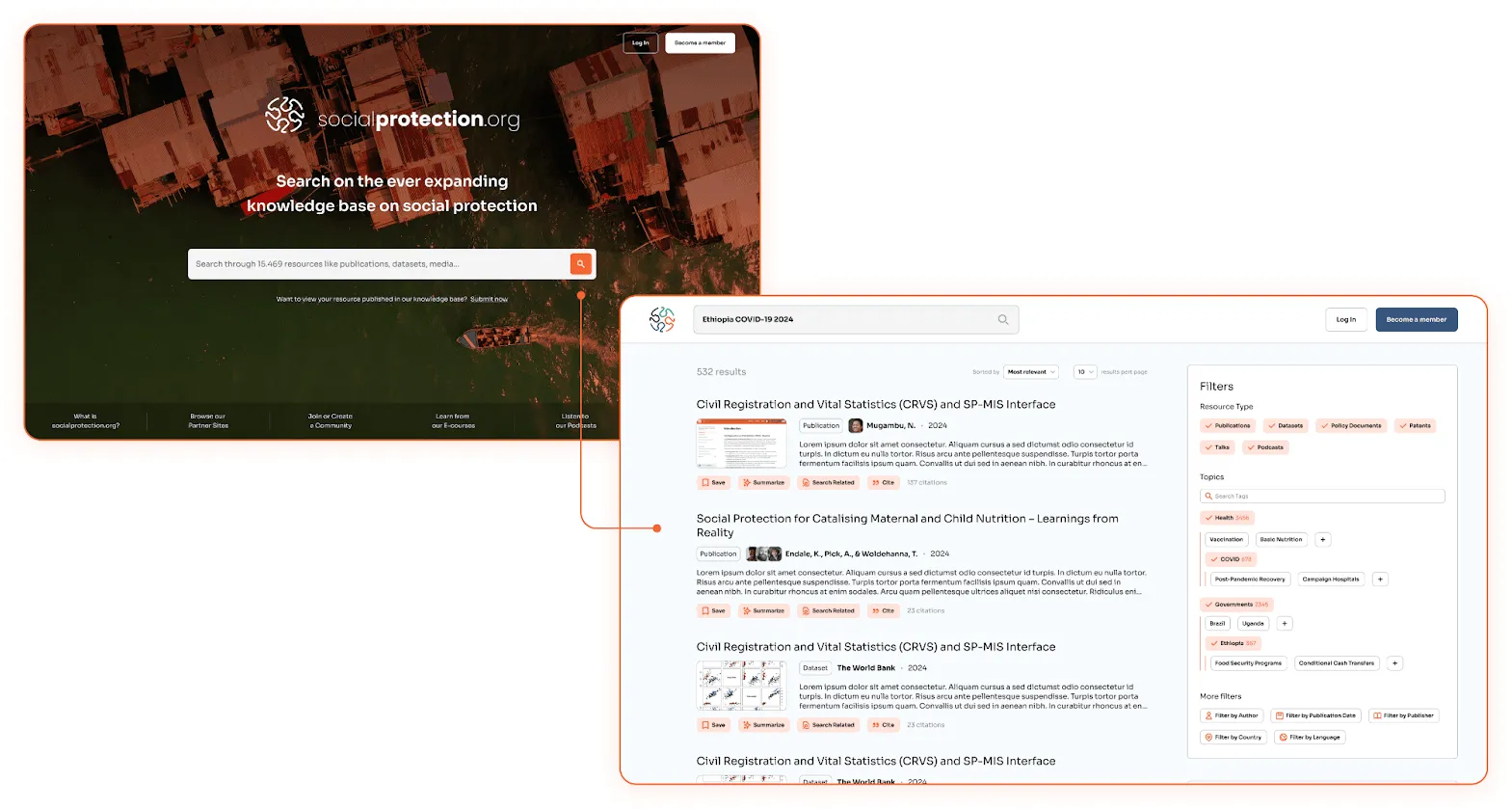
In an online workshop with the Product Owner and the Lead Engineer, we then mapped the key steps, touchpoints and goals of their journey, which set the priorities for the roadmap and the prototype.
Prototyping the AI features
Through design workshops and desk research, we prototyped a solution that set socialprotection.org apart from other well-known academic research platforms. The team reviewed it every day through async feedback on Microsoft Teams, the UN team’s main channel.
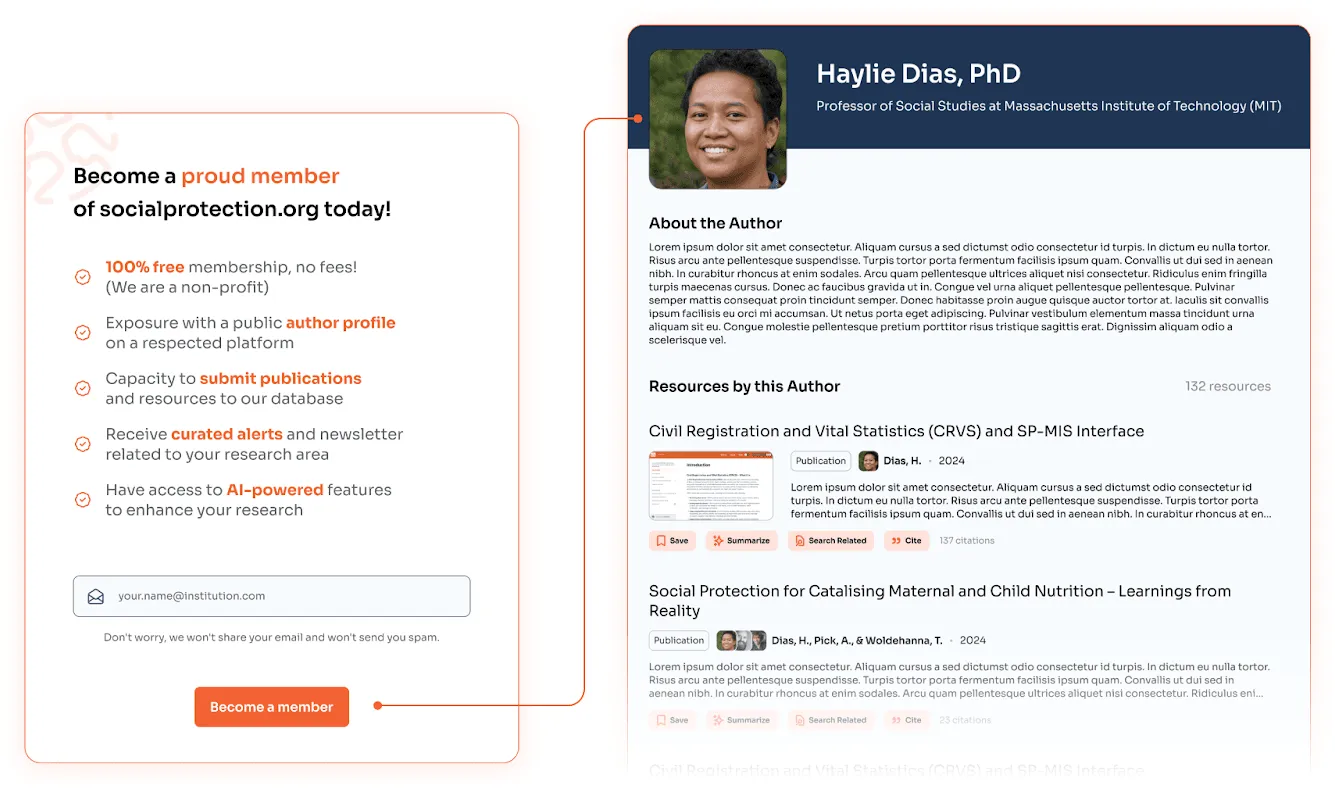
We made signing up much easier by showing all the benefits of membership up front, so creating an active profile takes little effort.
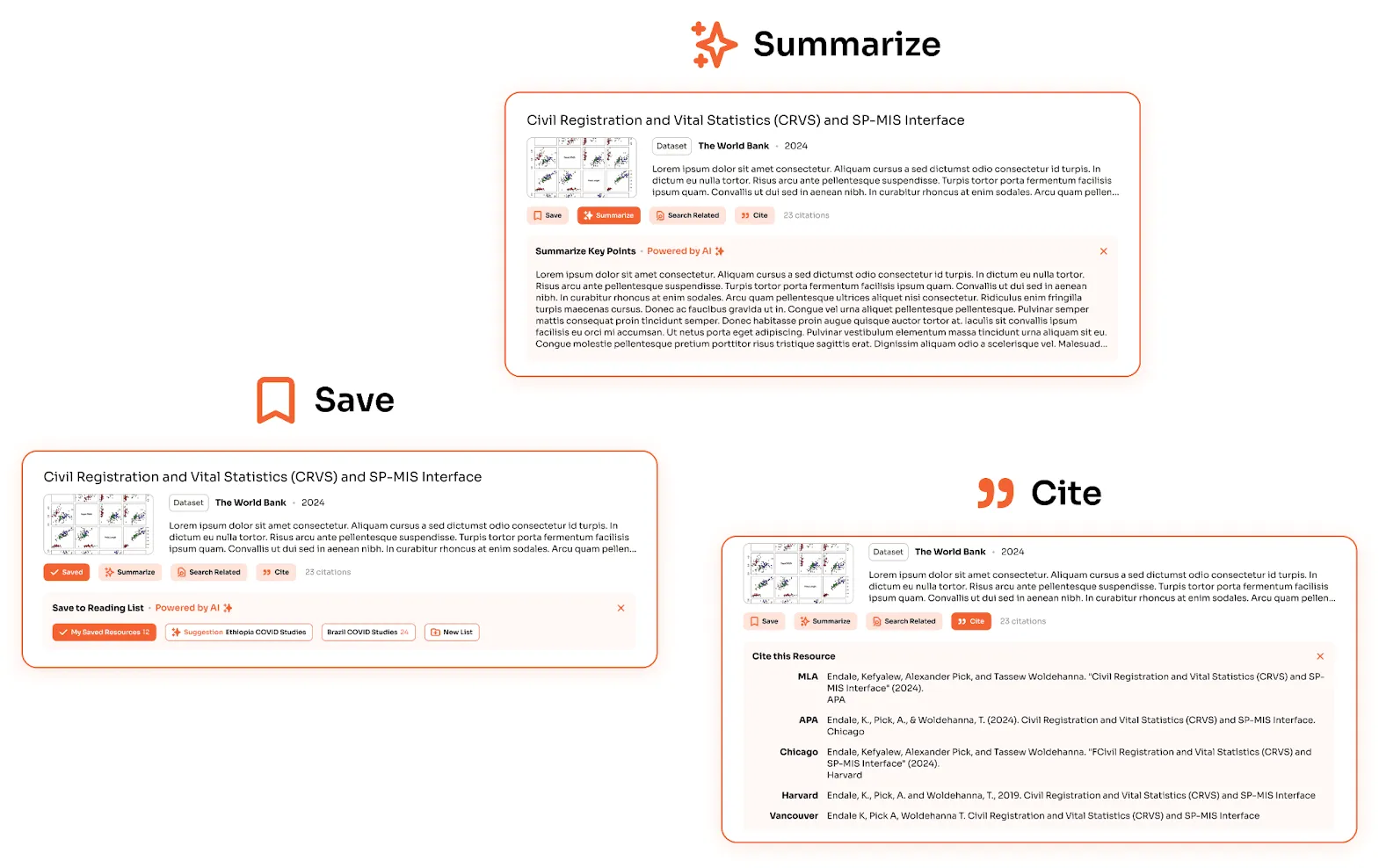
The final mockups added advanced filters, AI-powered features and a richer content library. The AI features included a summarization tool that makes it quicker to scan results across every kind of resource (publications, reports, case studies, academic papers, data and research tools), so researchers keep up with the latest work in their field.
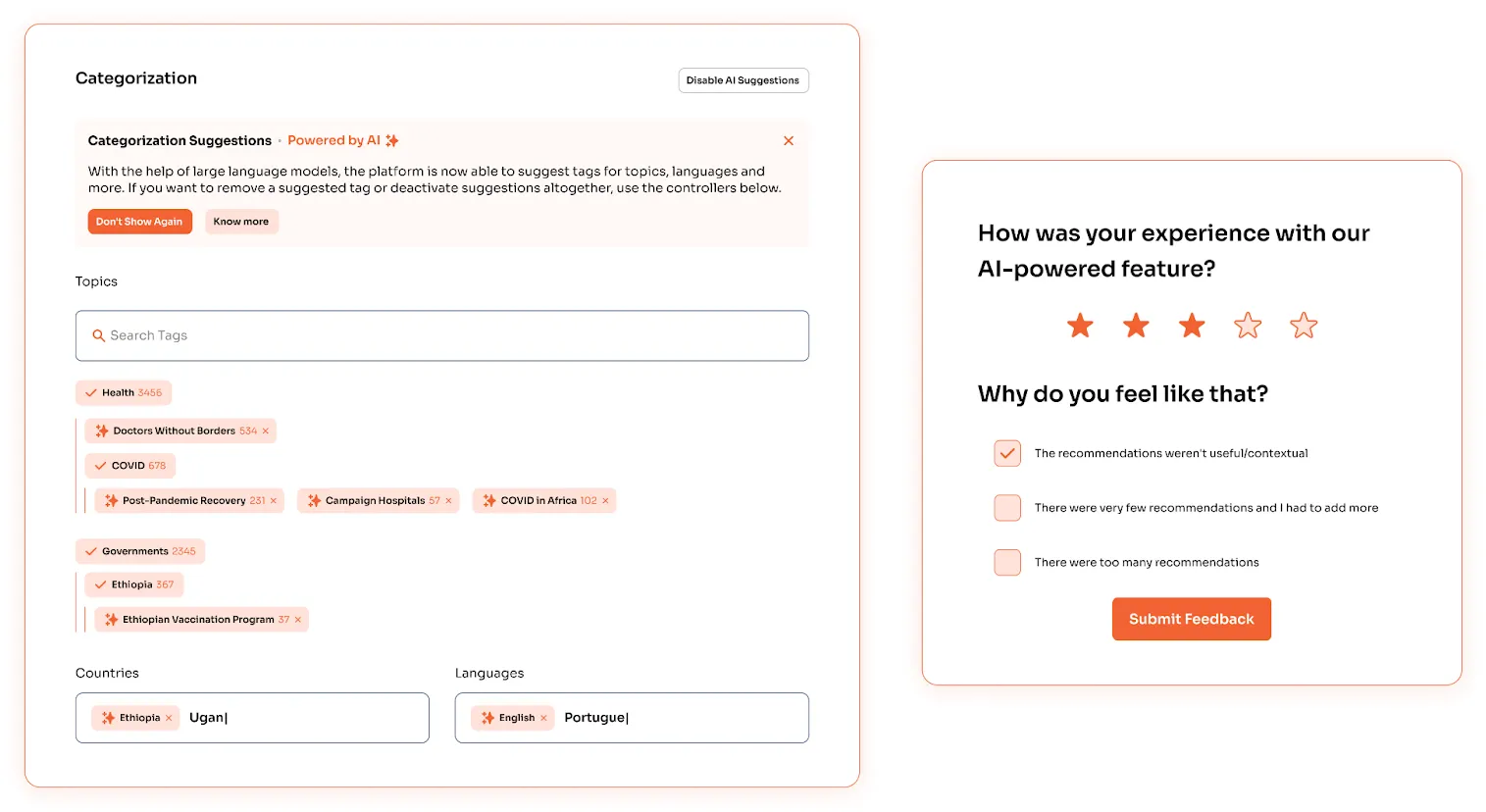
We also showed how AI suggestions could improve the experience: contextual reading lists, personalized recommendations, and automatic categorization when content is submitted. These features would make finding and contributing content much simpler, turning a slow manual task into a single click, which in turn drives adoption.
The architecture: a RAG pipeline
We also delivered a Technical Assessment with an architecture built on a Retrieval-Augmented Generation (RAG) pipeline.
Before LLMs were widely available, adding AI to a product took months of engineering: collecting data, building training and validation sets, choosing models and fine-tuning them, then integrating one or more models into the product. In our experience, building and training custom models is slow, error-prone and often too expensive for most clients.
LLMs change that for products built on natural language. With zero-shot learning, one model can handle tasks that used to need several models and a lot of training, which keeps the infrastructure simple. We proposed combining the LLM’s generative ability with the UN’s own data through a RAG pipeline, for contextual answers with little engineering effort and at low cost.
Proven technologies such as vector databases and embeddings extend the model’s knowledge and produce tailored answers without manual training. That lowers development cost and time to market, and makes the interactions feel more natural and aware of context.

Outcome: a focused, estimated plan
By the end of the engagement, we had turned the original requirements document, which described many features at a high level, into a narrower, focused scope with clear outputs and an estimated development timeline.
Studying the user experience on socialprotection.org let us understand the people we were designing for and shape a solution that uses AI where it matters most to their work: their biggest pain points and the jobs they need to get done.
One example is AI-powered taxonomic tagging: a big time saver when submitting new resources, and a much stronger base for search and categorization.
As consultants, we recommend the tool that best solves the client’s problem for the cost and time they want to invest. We did not choose LLMs here because AI is a hot topic, but because they were the best tool for the job: they make possible applications that would otherwise be very costly, and we use them where they solve problems better than traditional approaches.
These improvements will support better research and collaboration across the community and keep the platform a vital resource on social protection.
On behalf of the Social Protection team, I deeply thank Vinta’s team for their kindness, professionalism, and extremely high-quality work. The deliverables will be highly useful in building the platform.