3months together
- Building on MedplumBed dashboard and intake form
- Refining with cliniciansDemo videos and async reviews
What we did
- Medplum DevelopmentJoined Medplum’s team to finish a FHIR-native Transfer Center MVP for a hospital network.
- Healthcare Integration & InteroperabilityHL7 ADT messages through the Medplum Agent, updating bed status on the dashboard live.
- UI/UX DesignAn intake form and dashboard refined with clinicians through demo videos and async reviews.
Built with
- Medplum
- Node.js
- React


A regional hospital network wanted its transfer teams to see, in one place, which beds were open, which transfers were coming in and where each patient stood. Medplum’s engineers had started a Transfer Center app for it, and Vinta joined them for three months to finish the MVP: a live bed dashboard fed by HL7 ADT messages and a patient intake form shaped with the clinicians who would use it.
3 months
alongside Medplum’s engineering team, from its first foundation to a finished MVP.
Live
bed status on screen, pushed by WebSockets as each HL7 ADT message arrives.
About the Transfer Center
When patients move between facilities, transfer teams decide fast, and a few minutes of doubt about where a patient is, or which bed is free, can delay care and add load to clinical staff who are already stretched.
The network’s transfer teams coordinated across several facilities. The Transfer Center was to give them a real-time, FHIR-native view of bed availability, incoming transfers and patient status, and to show how Medplum works as a building block for hospital operations.

The challenge: a product shaped between shifts
Transfers between facilities involve several teams, patients whose condition changes, and quick decisions. In a typical urgent care setting, they run on phone calls, shared documents and manual updates that have to be confirmed again and again.
As the work moved on, the project had to balance three things common in clinical settings:
Many stakeholders
Physicians, nurses and coordinators each expected different intake data, above all for specialty flowcharts: what was mandatory, what came before physician approval, and how much detail each specialty needed.
Clinicians short on time
Clinical staff shaped the product between shifts, so most reviews happened through demo videos and structured feedback they could give when they had a moment, without stepping away from patients.
Workflows that came clear with use
The best insights came once clinicians used early versions of the intake form: what to group, which fields slowed them down, and how the form should adapt from one specialty to another.
None of this got in the way: it is part of building software around clinical judgment. Care flows made to measure take iteration and collaboration, and tools that bend to how frontline teams work, not the other way around.
What we built on Medplum
A live view of every bed
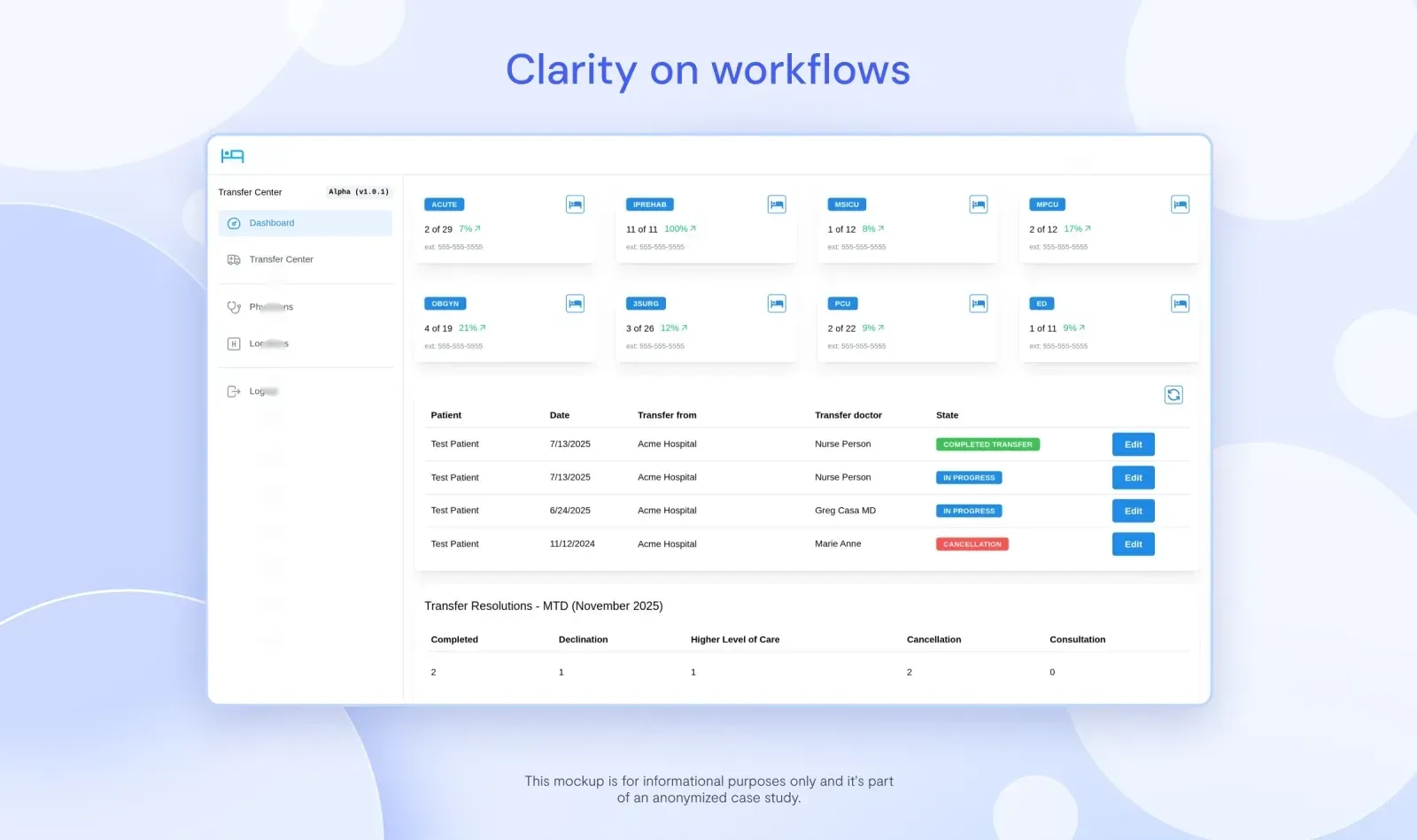
To show bed status in real time, we built a dashboard on Medplum that reads bed availability from HL7 ADT messages.
The MVP ran on SimHospital test feeds instead of live hospital data, which kept patient data out of the project while still proving the architecture. Each message went through the same path it would in production:
From an HL7 ADT event to the dashboard
- HL7 ADT event sent
- Medplum Agent receives it
- Location status updated
- Dashboard refreshed
The Medplum Agent securely received the events from outside systems and forwarded them; each one updated a FHIR Location.operationalStatus; and WebSockets pushed the change to the screen at once. In a full deployment, the same message would also create or update the patient’s FHIR Encounter.

One intake form for incoming transfers
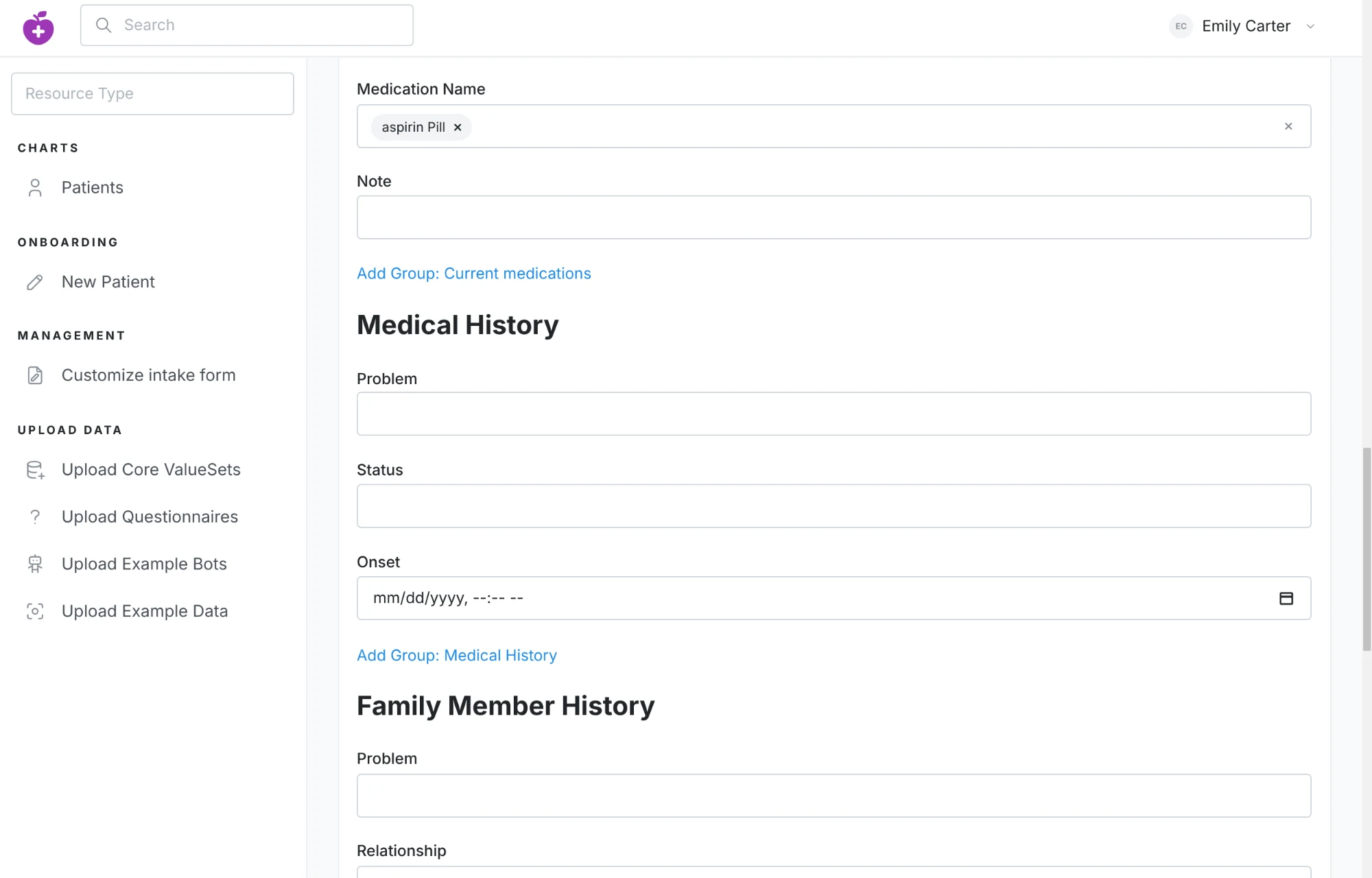
For the regional hospitals sending patients into the network, we built a configurable Patient Intake form. It covers demographics, vitals, fields for each complaint (stroke, STEMI, sepsis), key labs and imaging, all stored as Medplum resources.

With every transfer arriving in the same structure, intake no longer needed long back-and-forth calls.
Rules that follow each hospital’s structure
We built the app to stay flexible, from questionnaires for each specialty to facility hierarchies the network can configure, because hospitals organize transfers in different ways. Instead of forcing one process, the MVP showed how Medplum can fit the way each clinical team actually works.
What we learned building for care teams
Many roles, the right channels
Clinicians, coordinators and administrative staff each see a different side of the workflow. Structured async reviews brought every view into the product without pulling anyone from patients.
Clarity grows with each demo
Early versions of the dashboard helped staff name details that written requirements miss. Each demo sharpened how patient flow should be shown.
Clinical patterns matter
Clinical staff lean on tab-based form navigation and quick, low-effort data entry. Details this small decide whether care teams adopt a tool.
HL7 experience lasts
Working directly with HL7 ADT messages, even on test feeds, added to our interoperability toolkit for future EHR and integration projects.
Outcome: a foundation for operational visibility
The Transfer Center MVP showed that Medplum can power:
- real-time operational dashboards;
- bed status kept in sync across several facilities through HL7 ADT;
- structured patient intake that adapts to each specialty;
- a clear view of patient movement across the hospital network.
It also gave both teams a closer understanding of how clinical staff use patient flow tools, which still guides our work in healthcare interoperability and hospital operations.