Senior women in tech: how Vinta makes room for them to lead

Lais VarejãoChief Product Officer

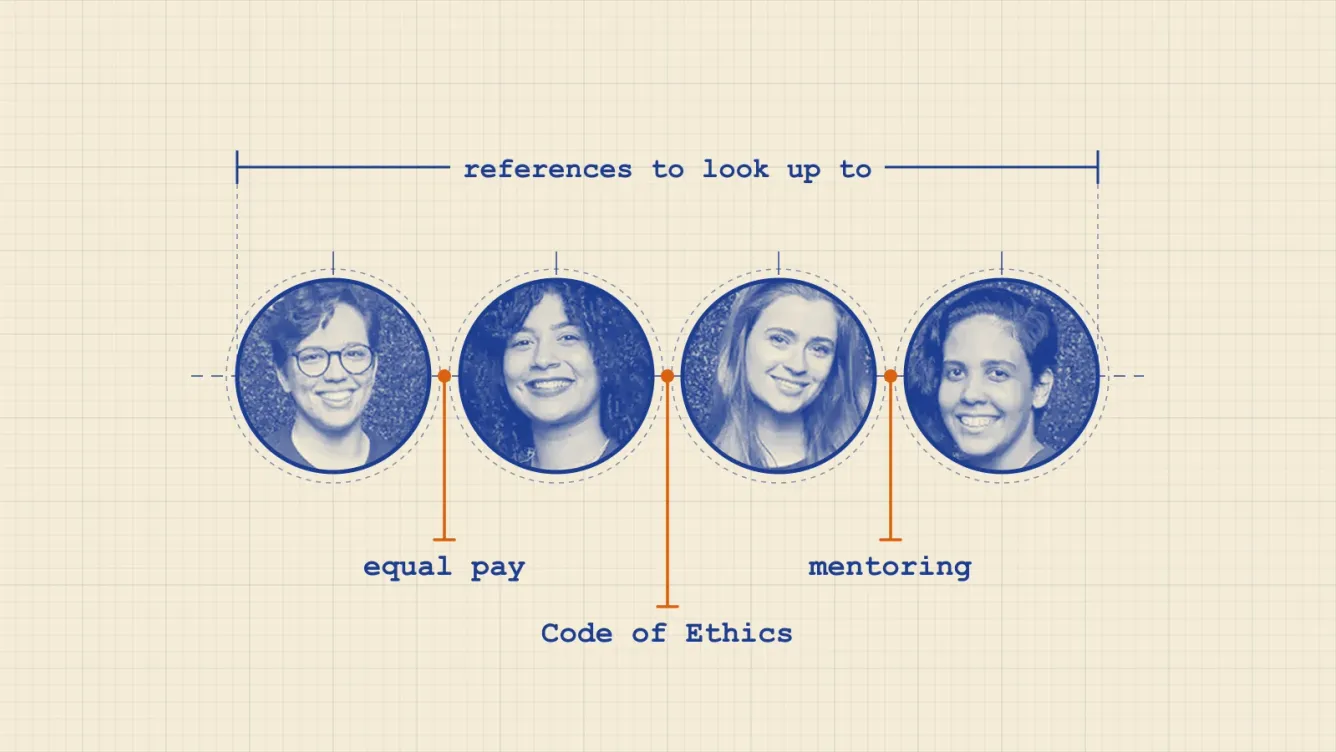
Few women reach senior roles in tech because the industry rarely gives them a voice, a path or people like them to look up to. At Vinta we work on all three on purpose: we pay the same salary for the same role and level, we hire and train women and other underrepresented groups, and we keep a Code of Ethics that makes the expected behavior explicit from day one. In July 2025, 43% of the leadership roles at Vinta were held by women.
Studies show that diversity improves people’s experience at work and the quality of what teams build. In the 2019 Bain and LinkedIn survey, 88% of respondents agreed that teams with diverse leadership get better results. This post covers why the gap exists and the practices we use to close it, from how we hire to how we evaluate performance.
Key takeaways
The gap is widest at the top
Women are a minority in tech, and a smaller one in senior and leadership roles.
Make expectations explicit
A Code of Ethics and an Ethics Committee give everyone a safe way to raise a problem.
Pay the same for the same role
Everyone at the same role and level at Vinta earns the same salary.
Give women references to look up to
Senior women in the team show newcomers the path, and mentor them along it.
Why are there so few senior women in tech?
Diversity in the tech industry is still limited. According to CAGED data, the Brazilian government’s record of formal employment, the share of women in tech grew 60% in the five years before 2023, from a starting point where only 20% of the sector were women. The gap is even wider when you look at senior women.
Sexist practices in the market keep it that way: sexist questions in interviews, job descriptions written with a man in mind, and motherhood still seen as a drawback. They also shape how women apply. Men apply for a job when they meet about 60% of the requirements, while women feel they need to meet 100%.
Women in tech also report how little voice they have: no effective measures for gender equality, and policies on recognition, rewards and pay that leave them out. Even engaged minorities in these companies point to their lack of say as a main barrier to change, and the result is work structures, cultural policies and benefits that are biased and exclude people.
The shortage of women in leadership is a consequence of these gaps, and it also keeps them in place. In companies run mostly by men, few people from underrepresented groups hold decision-making roles, so few leaders inspire the people who come after them. Without an internal support network and real action from the company, the cycle repeats.
How do you build a workplace where women can speak up?
Vinta is built by people, and we care about a place where everyone can take a position and help build teams that are more professional, fair and healthy. That work depends on psychological safety. It starts with the leaders, and it lets people share responsibility for a safe space with shared goals, which leads to more participation, engagement and performance.
A Code of Ethics was essential to build it. It sets clear expectations of how people connected to Vinta behave, with concrete examples and guidelines. Stating those expectations from day one keeps people safe in their working relationships and makes the values of respect and trust part of how we work.
The idea that “explicit is better than implicit” comes from the open source community, which shapes a lot of our values. Working close to it taught us that even in a flat organization, people need clear expectations of how members act. Our Code of Ethics also gives everyone a safe way to ask for help from the Ethics Committee and get a quick answer. Colleagues are part of keeping that space, and are encouraged to go to the Committee when they see something that affects a coworker.
How does Vinta hire and grow women in tech?
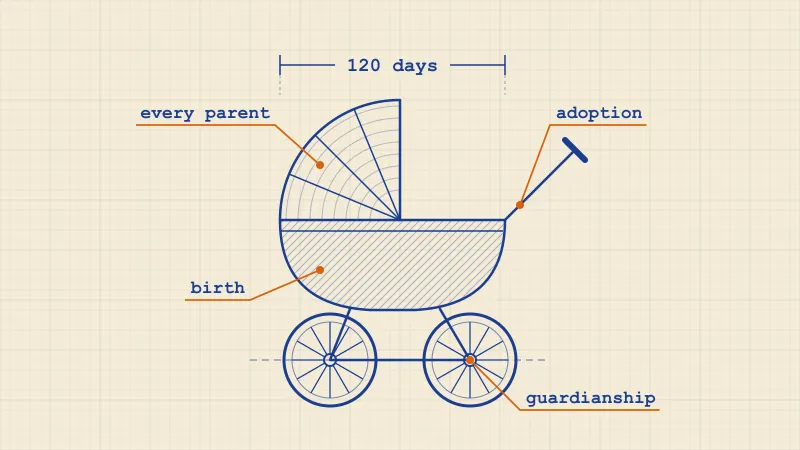
Getting companies to see why hiring, training and inspiring women matters is only half of the problem. The other half is integrating people who are not the majority, which takes policies on parity that affect their growth and their sense of belonging. Our 120-day parental leave for every parent is one of them.
The only way to change the picture is with systematic action, and these are the ones we have taken:
- A women’s internship program. We have run an internship program for women, to train highly skilled professionals and give women with less experience a place to start and grow their careers. We also helped organize Django Girls Recife, the free coding workshop for women.
- Affirmative openings for senior roles. We have opened affirmative positions for senior people from underrepresented groups, alongside active hunting, with a focus on Black people and women, the groups with the highest unemployment rate. More senior references in the company make it easier to train people in entry roles: newcomers have role models to pair with, be guided and be mentored by as their careers grow.
- A Diversity Circle. People at Vinta from underrepresented groups (women, Black people, LGBTQIAP+ people and people with disabilities) created a Diversity Circle to bring ideas and propose practical actions on diversity, inclusion and equity. Its insights reached our management processes and daily routine, and the work of hiring, culture and people operations.
- Equal pay for the same role. Everyone at the same role and level at Vinta earns the same salary. In hiring, we assess skills with behavioral questions, and our salary offer is tied to a level in our career plan.
What do senior women at Vinta say?
Building equal opportunity in roles and careers means listening to the people who have lived it. Talking with senior women at Vinta, it is clear that the problem cuts across society and shows up at many points in their careers. Here is what some of them said about how they started and how they see the market:
“It starts in college: the people I saw as senior Product Designers were men. The women usually disappeared, weren’t talked about, or weren’t there at all. Lists of reference designers from the 2000s were mostly men, too. It’s hard when you can’t see yourself somewhere, you know?”
(Anna Erbetta, Senior Product Designer at Vinta)
“(…) Today, maybe, I’d react differently to a Senior opening. Today I could apply for a Senior opening, because I understood that I had joined a company of specialists. I hadn’t had an experience at a company like Vinta yet; [the previous one] was a very big company, it was chaotic, there was no career and salary plan, and I didn’t know where I fit on the track. But once I had this experience here at Vinta, once I understood that I had other people as references, I understood that I’m at that level.”
(Gabriela Cavalcante, Tech Lead at Vinta)
At Vinta, we want to be that support. In July 2025, 43% of our leadership roles were held by women. That is not chance: people from underrepresented groups keep feeling at home in the space we build with attention and care. The people working in tech today are still mostly men, white, young and from a higher income bracket. Support networks, inclusion policies and training for women and other minorities are what will make tech in Brazil a field for everyone. If you want to be part of that, see our open positions.
Frequently asked questions
Why are there so few senior women in tech?
Sexist practices in hiring, few women in leadership to look up to, and policies on pay and recognition that leave women out. Women also tend to apply only when they meet every requirement, while men apply when they meet about 60%.
What share of Vinta’s leadership are women?
In July 2025, 43% of the leadership roles at Vinta were held by women.
How does Vinta make sure women are paid fairly?
Everyone at the same role and level earns the same salary. Salary offers are tied to a level in our career plan, assessed with behavioral questions in the hiring process.
What does Vinta do to hire more women?
We have run an internship program for women, opened affirmative positions for senior people from underrepresented groups and hunted actively for diverse candidates. We also helped organize Django Girls Recife, a free coding workshop for women.
Does diverse leadership improve results?
In the 2019 Bain and LinkedIn survey, 88% of respondents agreed that teams with diverse leadership get better results.
References
- Liderança feminina sem atalhos, Bain & Company and LinkedIn, 2019
- CAGED, Brazil’s Ministry of Labor and Employment
- Quem coda BR, PretaLab
- Por que mulheres se candidatam a menos vagas de emprego do que homens, UOL TAB, 2020
Related articles
Article · 5 min read
Parental leave at Vinta: 120 days for every parent
Why Vinta gives every parent 120 days of paid leave, whatever their gender or how their child arrives.
5 min read

Article · 8 min read
Revolutionizing software teams: the power of pragmatic hiring
The pragmatic hiring process we use to build high-quality software teams.
8 min read